


HR / Internship Enquiry
+91 9150222779
.webp)
Zoho Implementation Services That Actually Fit Your Business
Buying Zoho is easy. Making it work the way your business runs is where most projects stall. As a Zoho Premium Partner with 1,500+ implementations across the UAE, India, USA, UK, and Canada, we implement Zoho around your actual processes so your team adopts it, and it delivers from day one.
.webp)
Why most Zoho implementations underdeliver
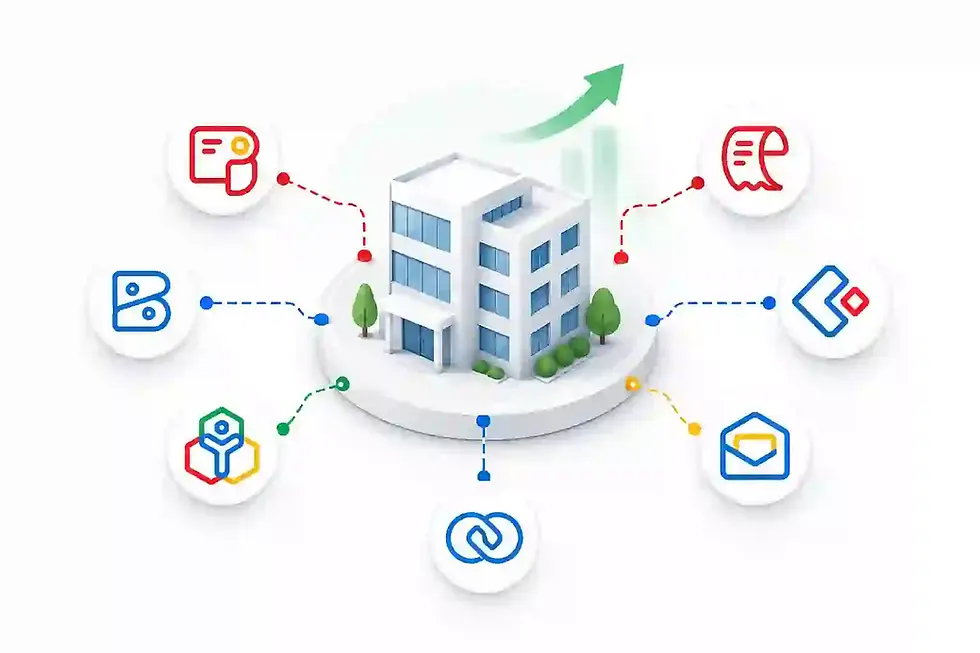
Zoho gives you 50+ powerful applications. That's the opportunity and the trap. Most businesses buy licenses, switch on the apps, and expect results. A few months later sales is in one module, finance in another, half the team is back on spreadsheets, and no two reports agree.
The software isn't the problem. The setup is. A proper Zoho implementation starts with how your business actually works then configures, connects, and rolls out the tools to match. That's the difference between software that gets used and software that gets abandoned.
.webp)
.webp)

1500+
Project Go-live
13+
Years Experience in ZOHO

50+
Certified Zoho Consultants
Our Zoho implementation process
A clear, proven process is what separates a smooth go-live from a stalled project. Here's how we work
Discovery & requirement mapping
We study how your business runs today - your sales process, finance workflows, HR approvals, and reporting needs - before touching any software.
.webp)
Solution design
We map the right Zoho apps to your requirements and design the configuration, integrations, and automations your business needs
.webp)
Configuration & customization
We build it modules, workflows, custom fields, automations, and any custom Creator apps - tailored to your processes.
.webp)
Data migration
We migrate your existing data cleanly from spreadsheets or legacy systems, so nothing is lost in the move.
.webp)
Testing & training
We test the full system and train your team — users, admins, and developers - so adoption sticks.

Go-live & ongoing support
We launch, monitor, and support your setup, optimizing as your business evolves.


1500+
Project Go-live

13+
Years Experience in ZOHO
50+
Certified Zoho Consultants

Why work with a certified Zoho implementation partner
You can configure Zoho yourself — but a certified implementation partner saves you months of trial-and-error and costly rework. As a Zoho Premium Partner, we bring:
-
Certified implementation consultants — 50+ in-house experts, not subcontractors, across CRM, finance, HR, and custom development.
-
1,500+ implementations of experience — patterns we've solved before, so you don't pay to discover them.
-
Cross-industry knowledge — real estate, manufacturing, distribution, healthcare, education, and professional services.
-
Partner of the Year recognition - awarded by Zoho for implementation quality.
-
Support that continues after go-live — because implementation is the start, not the finish.


INDUSTRIES USING ZOHO
Information Technology
Streamline projects, support, and billing with Zoho. From CRM and Desk to Projects and Analytics, connected as one system.
Real Estate
Zoho CRM and property management tailored for developers, brokers, agencies, lead capture, listings, and follow-up automation.
Auto Garages
Manage bookings, job cards, service history, and invoicing in one place, so your workshop runs without the paperwork.
Fintech
Automate client onboarding, workflows, and reporting with secure, compliant Zoho setups built for financial services.
Media
Coordinate campaigns, clients, and content pipelines with Zoho CRM and project tools built for how media teams work.
Textile & Apparel
Track production, inventory, orders, and fulfillment across your supply chain with Zoho configured for manufacturing.
Automotive
Connect sales, service, inventory, and customer records so every part of your dealership or workshop works from one system.
Agriculture
Digitize field operations, procurement, and inventory with custom Zoho apps built for agri-businesses.
Electronics
Manage manufacturing, inventory, and order fulfillment with Zoho set up for electronics production and distribution.
Insurance
Automate policies, quotes, renewals, and claims workflows with Zoho CRM configured for brokers and agencies.
Hospitality
Improve guest management, bookings, and follow-up with Zoho CRM and workflows built for hotels and hospitality teams.
Professional
Services
Run projects, time tracking, billing, and client management on one connected Zoho system built for service firms.


WHAT WE IMPLEMENT
Zoho implementation services we deliver
We handle end-to-end implementation across the Zoho ecosystem:

.webp)
Sales pipelines, lead capture, automation, and reporting configured to how your team actually sells.
.webp)
The full 50-app suite integrated into one connected platform, with one login and shared data across every department.
.webp)
Zoho Books implementation
Cloud accounting set up for clean invoicing, expense tracking, and tax-compliant reporting.
.webp)
Zoho People & Payroll implementation
HR and payroll workflows from onboarding to payouts, automated and compliant.
.webp)
Zoho Desk implementation
Omnichannel support with smart ticketing and automation.
.webp)
Zoho Creator development
Custom low-code apps for the workflows off-the-shelf modules can't cover.
The Right Partner
Makes All the Difference
Picking the right partner decides whether your Zoho setup works or quietly fails.
Experience that matches your business.
Ask how many implementations they've done in your industry. A partner who's set up Zoho for ten real estate firms will solve your problems faster than one who's
only worked with retail.
A real discovery process.
A good partner asks questions before quoting. If they jump straight to pricing without understanding your business, they'll build
the wrong system.

Support after go-live.
The first few months after setup are when most issues show up. Make sure the partner stays involved, not just till the system is handed over.

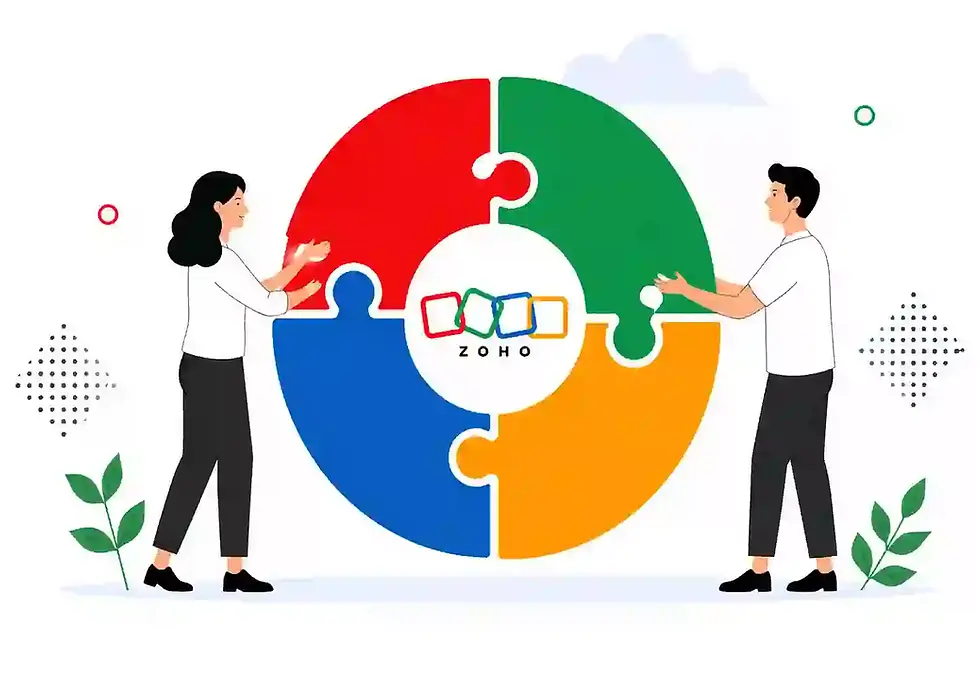
We don't just Implement Zoho. We keep your momentum going
Implementation is just the beginning. From post-go-live support to optimization, training, and troubleshooting — we ensure your Zoho journey stays on track and delivers continuous results.

Solutions That Fit Your Business
Custom Zoho solutions built around your workflows and goals.

Expertise You Can Rely On
13+ years of experience delivering reliable and scalable results.

Partnerships That Drive Growth
We’re with you at every step committed to your long-term success.
.webp)
Zoho Implementation FAQ
Cost depends on which apps you implement, how much customization and integration you need, and your data migration scope. Rather than a fixed package, we scope your requirements in a free consultation and give you a clear, itemized quote. Small single-app setups and full Zoho One rollouts sit at very different price points.
A focused single-app implementation (e.g. Zoho CRM) can go live in a few weeks. A full Zoho One rollout across departments typically takes longer, depending on complexity and data migration. We give you a realistic timeline during solution design.
Six stages: discovery and requirement mapping, solution design, configuration and customization, data migration, testing and training, and go-live with ongoing support. (See our process above.)
Yes. A significant share of our work is rescuing stalled or poorly configured setups, cleaning up the configuration, fixing broken automations, migrating data properly, and getting teams to actually adopt the system.
Yes. We offer ongoing support, optimization, and training on monthly, quarterly, and yearly plans, so your Zoho system keeps pace with your business.
The full suite, Zoho CRM, One, Books, People, Payroll, Desk, Projects, Creator, Analytics, Inventory, and more.